


Financial markets are essential channels for mobilising savings, allocating capital, and maintaining systemic stability.
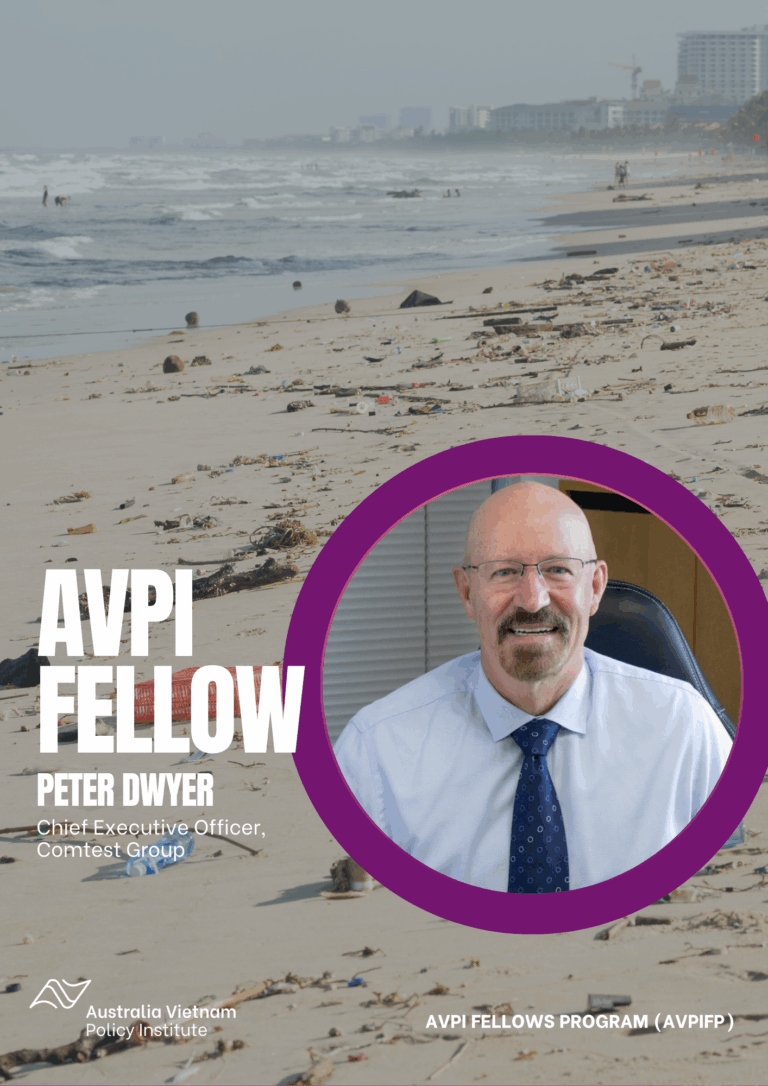
In this article, AVPI Fellow Dr My Nguyen (Associate Professor of Finance and Deputy Head of Finance, RMIT University) compares the Ho Chi Minh Stock Exchange (HOSE) and the Australian Securities Exchange (ASX) to surface practical reforms Vietnam can adopt as it moves toward emerging-market status.
Australia’s well-regulated, highly liquid markets offer a clear playbook to help Vietnam reduce volatility, attract long-term capital and accelerate inclusion in global equity benchmarks, supporting shared goals for a stable, prosperous region.
The article contrasts ASX’s depth and liquidity, trading at near-GDP scale with strong daily turnover and reliable execution – with HOSE’s faster but more cyclical growth, fewer listings and higher concentration risk. It shows how ASX rebounded quickly after the GFC and COVID, while HOSE’s retail-driven boom-bust cycles recovered more slowly. Sector breadth on the ASX (Financials, Materials, Health Care, IT) provides counterweights, whereas HOSE’s bank- and property-heavy mix amplifies swings. Finally, ASX’s dynamic volatility controls, regulated short-selling and active derivatives stand in contrast to HOSE’s static daily price bands and thinner risk-management toolkit.
Disclaimer: This AVPI Fellows article is a condensed version of a research paper that will be published in late-2025 or early-2026. The International FinanciCentre Research Project is a collaborative research project between the Australia Vietnam Policy Institute, Ho Chi Minh Institute for Development Studies, and the RMIT College of Business and Law. We look forward to sharing the full series with you soon.
Key takeaways
- Adopt dynamic volatility controls (AOT/ETR-style) to improve price discovery and avoid pent-up swings.
- Phase in supervised short-selling with clear disclosure to add liquidity and hedging capacity.
- Broaden derivatives and ETFs beyond VN30 futures (index options, sector futures, low-cost ETFs) to diversify participation.
- Keep liberalising foreign ownership in non-sensitive sectors to deepen institutional flows.
- Tighten disclosure and governance (continuous disclosure, stronger English reporting) to cut information asymmetry.
- Encourage sector diversification, especially manufacturing, healthcare and technology to dilute concentration risk.