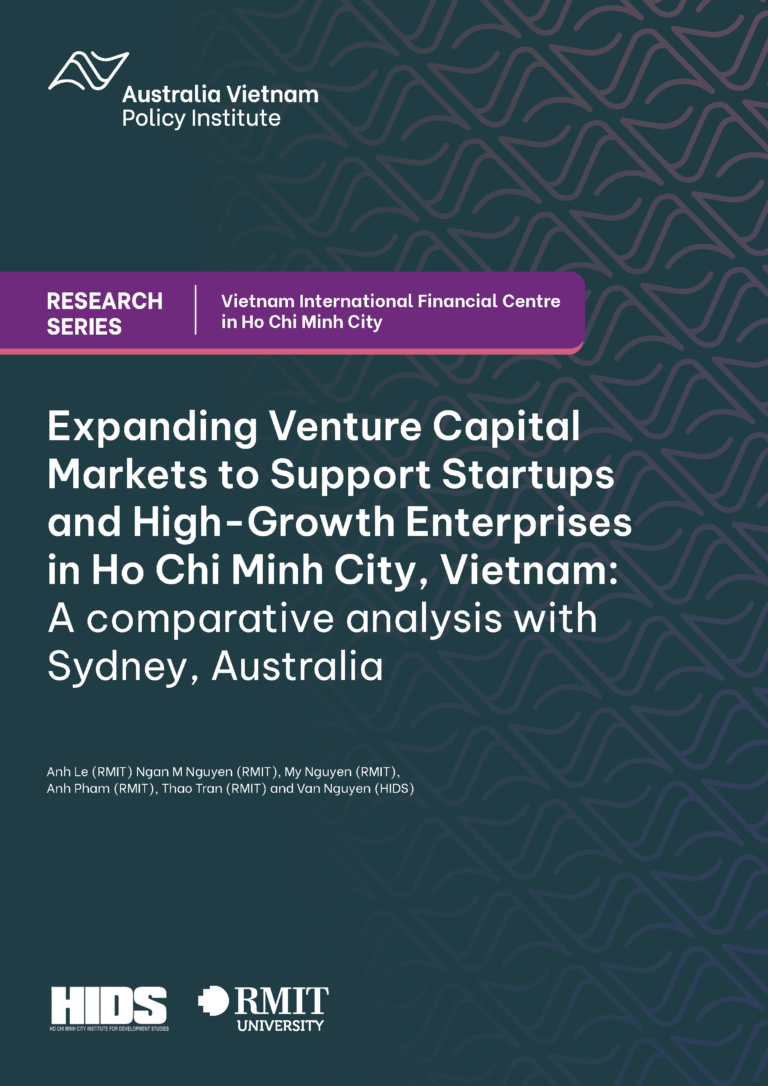



This study examines the comparative development, performance, and resilience of the Ho Chi Minh Stock Exchange (HOSE) and the Australian Securities Exchange (ASX) between 2005 and 2025.
The two markets embody the contrasting dynamics of an emerging and a mature exchange. The Australian Securities Exchange demonstrates high depth, liquidity, and stability, underpinned by institutional investors, compulsory superannuation inflows, and robust regulatory architecture. In contrast, the Ho Chi Minh Stock Exchange has expanded rapidly from a small, retail-driven base to a significant emerging market, but continues to grapple with volatility, sectoral concentration, and infrastructure bottlenecks. The analysis draws on descriptive statistics and crisis case studies – including the 2008 Global Financial Crisis and the 2020 COVID-19 shock – to assess market performance under stress. It highlights key regulatory differences, particularly Sydney’s reliance on dynamic volatility controls and short-selling frameworks versus Ho Chi Minh City’s use of static daily price bands. Findings further suggest that Vietnam’s capital-market reforms, including the 2019 Securities Law, the liberalisation of foreign-ownership rules, the implementation of Decree 245/2025/NĐ-CP, and the 2025 Korea Exchange (KRX) trading-platform rollout, create a stronger foundation for market modernisation and resilience. The analysis emphasises new opportunities enabled by KRX, including intraday trading capacity, enhanced system throughput, improved post-trade safety, and the groundwork for short selling. Policy recommendations include implementing dynamic order-level controls, phasing in supervised covered short-selling, strengthening the legal framework for derivatives (potentially elevating it to Law level), expanding exchange-traded funds (ETF) and derivatives markets, and accelerating calibrated foreign-ownership liberalisation supported by a central-counterparty clearing model. Together, these steps could strengthen Ho Chi Minh City’s market infrastructure, attract long-term institutional capital, and reduce reliance on volatile retail flows.
This paper is part of a collaborative AVPI research series providing policy advice for the development of Vietnam’s International Financial Centre in Ho Chi Minh City. For the full details behind these insights, download the research paper below.